Jane Andrews
Anne of the IslandJane Andrews is a practical, unassuming member of Anne Shirley’s old circle whose story takes her from the Avonlea school to teaching in the West and, ultimately, to marriage with a millionaire. Her path includes an awkward family errand on behalf of her brother Billy, a departure from Avonlea, and a return accompanied by engagement, jewelry, and plans for a new life in Winnipeg. Through Jane, the narrative sets ordinary competence and loyalty against the community’s judgments about beauty, education, money, and marriage.
Identity and Place in Avonlea
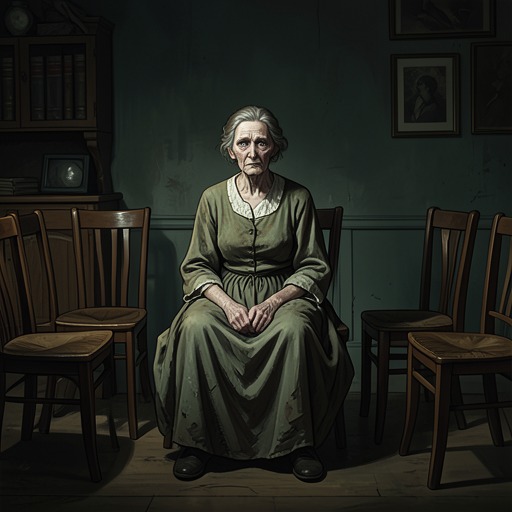
Jane Andrews belongs to the old group of friends who gather with Anne Shirley before Anne goes to college. She is described as neat, sensible, and plain, a spare portrait that contrasts with the more conspicuous looks and romantic reputations attached to some of the other young people. The description gives her a distinct place in the group: she is not presented as a flirt or a spectacle, but as steady company whose importance becomes clearer through what she does.
Jane is also part of a closely connected Avonlea family. Her brother Billy is too shy to ask Anne to marry him himself, and their father gives Billy the upper farm in his own name. Jane becomes the intermediary between them, carrying a proposal that is not hers but has immediate consequences for her friendship with Anne. Later, Billy appears in church with his bride, Nettie Blewett, while Jane is singing in the choir. The family’s shared pride in the marriage makes the earlier proposal look, in retrospect, less like a heartbreak than a brief and awkward episode in Billy’s life.
The Proposal Jane Carries
During the Christmas holidays, Jane stays overnight with Anne in Anne’s small porch room. Anne is sleepy after a party and expects an ordinary confidence; she has no idea what Jane is about to tell her. Instead, Jane solemnly asks whether Anne would like Billy for a husband. Billy, she explains, wants to marry Anne but is too shy to ask her directly, and he has pressed Jane to speak for him.
The scene places Jane in an uncomfortable position. She says she would rather not have undertaken the task, but Billy would give her no peace until she agreed to take the opportunity. Her direct, calm question contrasts with Anne’s stunned response: Anne has never thought of Billy as a possible husband and struggles to refuse without hurting Jane. Jane has not created the feeling she is conveying, but she is responsible for presenting it face to face. The episode makes her both a practical family go-between and a friend who has to manage the delicate business of rejection.
Jane’s return to the subject is implicit in what happens afterward. When Anne comes back to Avonlea with the Thorburn Scholarship, she sees Billy proudly introduce Nettie Blewett as his bride. Anne remembers the proposal from that stormy winter night and wonders whether Jane had also proposed to Nettie on her brother’s behalf or whether Billy had finally found the courage to ask for himself. The question is left unanswered; what is clear is that Billy did not remain broken-hearted by Anne’s refusal. The contrast makes the old incident gently comic rather than tragic.
Teaching, Departure, and Return
After Billy’s wedding, Jane resigns from the Avonlea school and intends to go West in the fall. Anne defends her against Rachel Lynde’s suggestion that she is leaving because she cannot find a suitor in Avonlea. Anne describes Jane as a nice girl who never tried to attract attention, answering gossip with loyalty rather than treating Jane’s quiet manner as a failing. Jane’s departure therefore marks a change in the old circle as well as a practical step in her own life.
Jane does go West to teach, and later returns to Avonlea. The narrative does not provide a detailed account of her time away or specify the circumstances of her courtship. Instead, her return is first reported by Rachel Lynde: Jane has come home and is going to marry a Winnipeg millionaire. Rachel questions whether the man is truly English, as the report claims, and dismisses him as a match defined by money. Anne responds warmly that Jane deserves good things in life. Their different reactions establish a recurring contrast: Rachel evaluates the match through suspicion and social comparison, while Anne’s first concern is her friend’s happiness.
A few evenings later, Anne visits intending to see Jane but finds her away in Charlottetown, where she is getting sewing done. Jane’s mother, Mrs. Harmon Andrews, presents the preparations as appropriate to the circumstances: an Avonlea dressmaker, she implies, would not do for a bride marrying into such wealth. Mrs. Harmon says Mr. Inglis is worth millions and that the couple will travel in Europe for their wedding tour. Afterward, she expects them to live in a marble mansion in Winnipeg, with a cook, two other maids, a coachman, and a man-of-all-work.
Marriage, Work, and Other People’s Judgments
The details of Jane’s expected household sharpen the difference between her earlier life and the future her family describes. Mrs. Harmon points out that Jane can cook very well, but says her husband will not let her cook because he is rich enough to hire the work done. Domestic skill, once a useful capacity, is recast as something the new household will not need from its mistress. The account is Mrs. Harmon’s, offered with evident pride; the story does not provide Jane’s own view of these arrangements.
The engagement also prompts comparisons with Anne. Mrs. Harmon asks Anne what has become of her own prospects for marriage after all her years of college. Anne jokes that she is going to be an old maid because she cannot find anyone to suit her, deliberately reminding Mrs. Harmon that she has had at least one opportunity. Mrs. Harmon retorts that over-particular girls are often left, then raises a rumor about Gilbert Blythe. Jane’s wealth and engagement have become a measure against which others assess Anne, although Anne refuses to treat marriage as a competition.
When Mr. Inglis arrives at the end of May, he carries Jane away in what the narrative describes as a blaze of splendor. Rachel Lynde is spitefully pleased to discover that he is about forty, short, thin, and grayish, and enumerates his shortcomings. Anne, still loyal to Jane, judges him differently: he looks kind and good-hearted, and she is sure he thinks the world of Jane. Jane’s marriage is thus presented not only through its wealth and public display but through competing judgments of the man she has chosen. The evidence gives the community’s opinions and the arrangements announced for the couple’s future, while leaving Jane’s private account of the marriage unspoken.